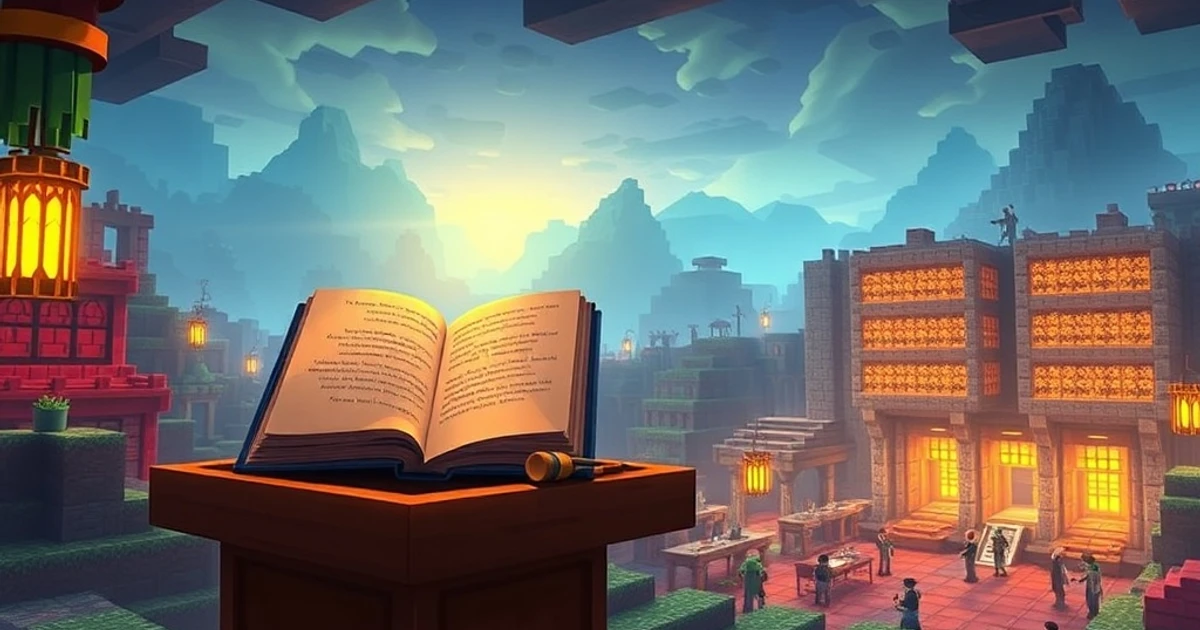
Why Minecraft is the Ultimate Creative Tool for Child Development
Minecraft isn't just a game—it's a digital canvas for creative expression and learning. Discover how this blocky universe helps children develop essential skills through play.
Minecraft: Where Creativity Meets Development
Minecraft is often dismissed as "just a game," but anyone who's spent time in it knows the truth: it's fundamentally a creative playground. When your child places their first block, they're not just playing—they're architecting, problem-solving, and expressing themselves in ways traditional toys simply can't facilitate. The beauty of Minecraft lies in its radical freedom. There's no single "correct" way to play, no predetermined narrative forcing you down a linear path. Instead, you get a blank canvas (literally made of blocks) and the tools to build literally anything your imagination can conjure.
The Science Behind Creative Play
Research in child psychology consistently shows that creative play is crucial for cognitive development. When children engage in unstructured creative activities, they develop critical thinking skills, emotional intelligence, and problem-solving abilities that transfer to real-world situations. Minecraft amplifies this because it combines creative freedom with immediate, tangible feedback—kids build something, see it in 3D space, and can iterate endlessly. Unlike passive entertainment, Minecraft requires active decision-making: What should I build? How do I make it structurally sound? What materials will work best? These questions naturally develop planning, spatial reasoning, and the ability to break complex projects into manageable steps.
Building Confidence Through Creation
One of the most powerful aspects of Minecraft is the confidence boost that comes from completing creative projects. A child who builds their dream house, creates an elaborate farm, or designs a functioning redstone contraption isn't just playing—they're experiencing genuine accomplishment. This sense of agency is incredibly important for developing self-esteem and motivation to tackle challenges. Every block placed is a small victory, and every completed project is proof that their ideas matter and can become reality. For shy or introverted children, this non-verbal form of expression can be especially meaningful, allowing them to showcase their personality and talents in a low-pressure environment.
Collaborative Creativity and Social Skills
When you run a Minecraft server (like those hosted on PaperChunk), you unlock another dimension of creative development: collaborative building. Kids working together on shared projects learn negotiation, compromise, and communication skills naturally, without it feeling like a lesson. They're not thinking about "social development"—they're focused on creating something awesome with their friends. A multiplayer server becomes a community workspace where different creative visions come together. One player might design buildings while another focuses on landscaping, another on automated systems. This division of labor teaches valuable lessons about teamwork and recognizing different strengths, all while having genuine fun.
Different Types of Creative Expression in Minecraft
What makes Minecraft special is the sheer variety of creative outlets it provides. Architectural builders can focus on designing structures, experimenting with different styles and aesthetics. Redstone engineers can dive deep into logic circuits and automation, essentially programming within the game. Pixel artists can create detailed artwork one block at a time. Storytellers can build narrative-driven worlds and quest lines. Terraformers can sculpt landscapes into works of art. This diversity means that virtually any child can find a creative avenue that speaks to them. A child who struggles with traditional art might discover they have an eye for architecture. A shy kid might express themselves through building rather than speaking. The multiplicity of creative paths is what makes Minecraft such a universal tool for development.
Practical Tips for Parents and Server Owners
If you're a parent wondering how to support your child's Minecraft creativity, here's what works: Create dedicated server space if possible (PaperChunk makes this affordable), give them regular time to build, and genuinely engage with what they're creating—ask about their projects, visit their builds, let them explain their design choices. Don't impose your vision; let their creativity lead. For server owners running communities, consider creating special zones for gallery worlds where players can showcase completed projects, or organize build competitions that celebrate different creative styles. These community features transform Minecraft from a solitary activity into a shared creative experience. Don't underestimate the power of recognition—when a child knows their creation will be seen and appreciated by others, the motivation to create increases exponentially.
The Long-Term Benefits Beyond Gaming
Here's something that might surprise you: the creative skills kids develop in Minecraft genuinely transfer to real-world domains. Children who excel at architectural design in Minecraft often show interest in actual architecture or engineering. Those who create complex redstone systems develop logical thinking applicable to math and programming. The spatial reasoning, planning abilities, and iterative problem-solving mindset they cultivate through building worlds serve them well in academics and future careers. Minecraft isn't just entertainment—it's educational play, the kind that researchers emphasize as absolutely crucial for healthy development. Moreover, in an increasingly digital world, giving children a space where technology facilitates creativity rather than consumes their attention is genuinely valuable.
Conclusion: Unlocking Your Child's Creative Potential
Minecraft represents something almost magical in the realm of child development: a tool that's simultaneously fun, accessible, educational, and genuinely creative. It respects children's autonomy while encouraging them to think critically, plan carefully, and execute boldly. Whether your child is building an elaborate castle, designing a functional farm, or collaborating with friends on a shared world, they're engaged in meaningful creative work that develops essential life skills. If you're not already running a server for your child or community, consider what a dedicated, distraction-free Minecraft space could mean for their creative development. The blocky worlds of Minecraft might seem simple, but within them lies extraordinary potential for growth, expression, and learning. That's not just a game—that's development in its finest form.
Written by PaperChunk Team